Guide
Avoiding locksmith scams: the checklist before you sign
An emergency does not remove your right to information or the need to understand the work. This checklist complements our quote guide with ten checks to use on the phone, on site and after the visit.
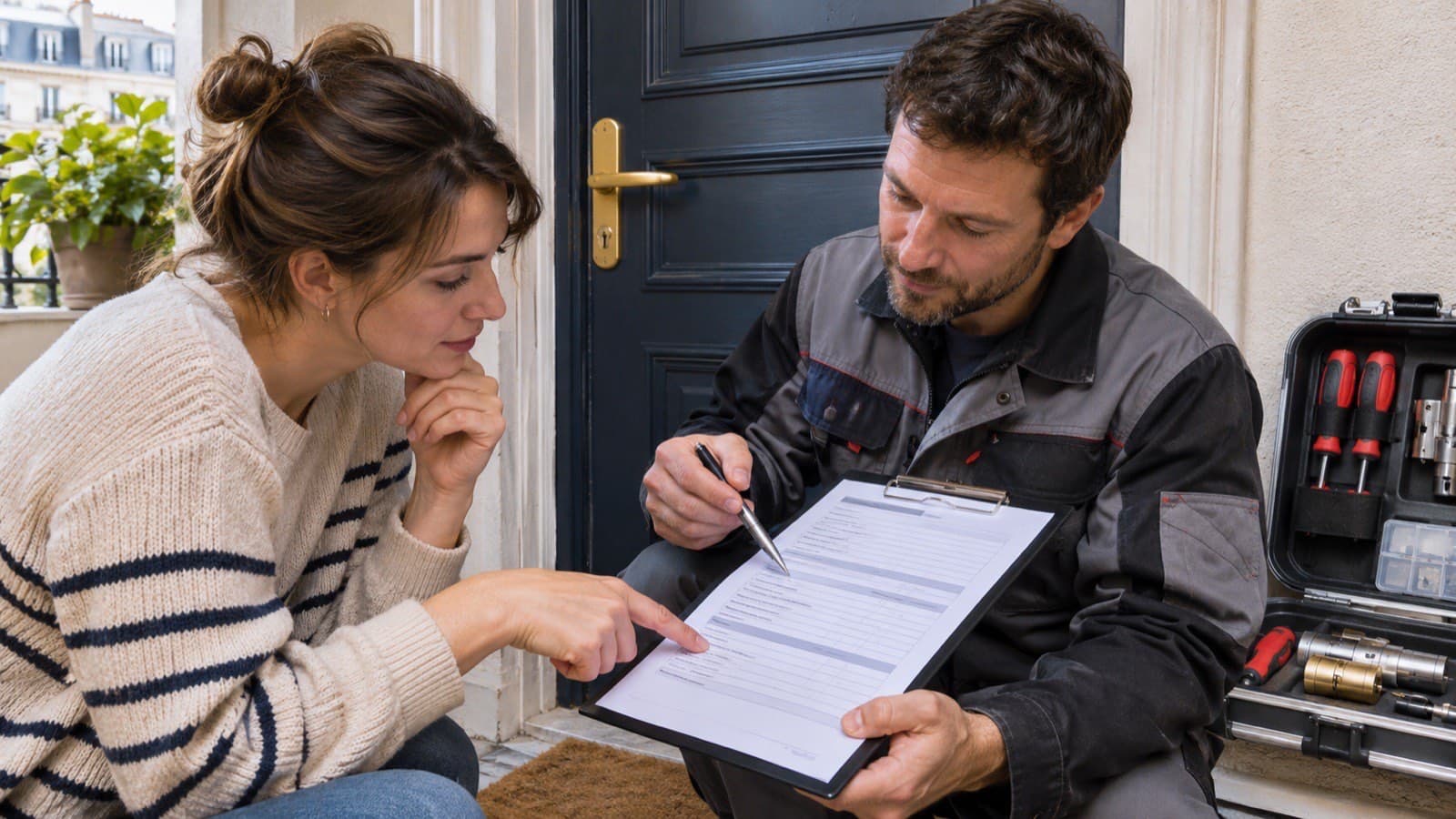
Before the visit: check the business and quoted price
Before confirming the visit, gather the information needed to identify the business and compare the price you have been given.
- Check the business identity: legal name, SIRET number, address and working contact number. Use the official French company directory rather than trusting an unverified address.
- Describe the situation precisely: slammed or locked door, broken key, door type and visible damage. An estimate based on a vague description has little value.
- Ask what the price includes: travel, labour, surcharges, materials and the quote. A very low headline price with no defined scope does not predict the final total.
- Note the company name and stated terms. If a different name appears on the paperwork, ask who is actually invoicing the service.
On site: read before signing
The on-site diagnosis should be followed by a clear written proposal before any work starts.
- Require a written quote or contract before work. The French consumer authority’s home call-out guidance explains the required information.
- Check the detail: repair, quantity and price of parts, labour, travel, and totals before and after VAT. A single unexplained figure cannot be compared.
- Ask why a destructive method or replacement is necessary. A slammed door does not automatically justify drilling the cylinder.
- Do not sign an incomplete document or one dismissed as a formality. Have blank lines, unwanted options and differences from the estimate corrected.
During the work: refuse unexplained additions
If a new difficulty appears, it should be explained and priced before work continues. Ask to see the relevant part and understand why the initial solution is no longer appropriate.
Do not allow an extra lock, reinforcement or accessory to be added without a separate decision. An emergency visit is not the time to sell preventive work that is unnecessary for restoring use.
If you face pressure, threats or an unexplained increase, suspend the work when it is safe to do so. You can report suspicious practices through SignalConso, the French consumer-reporting service.
After the visit: preserve the evidence
- Request an itemised invoice matching the quote and the work actually completed. Check the part reference, total and business identity.
- Test the door before the locksmith leaves and retain the quote, invoice, messages, photographs and any removed part that may be needed for a complaint or insurance claim.
If a dispute arises, first send a written complaint to the business. Contact details for its consumer mediator should be available in its documents or published information.
Use the checklist without assuming every problem is fraud
A delay or an evolving diagnosis is not automatically a scam. The important warning sign is the absence of an explanation, document or informed agreement.
Conversely, a polished website or many reviews do not prove the quality of a visit. Cross-check the legal identity, quote and proposed method.
For a line-by-line review, read how to choose a locksmith and understand the quote.