Guide
How to choose an armoured door: a practical, verifiable method
The number of locking points or thickness of the steel is not enough to assess an armoured door. Resistance depends on a coherent system, suited to the frame, correctly installed and described by verifiable references.
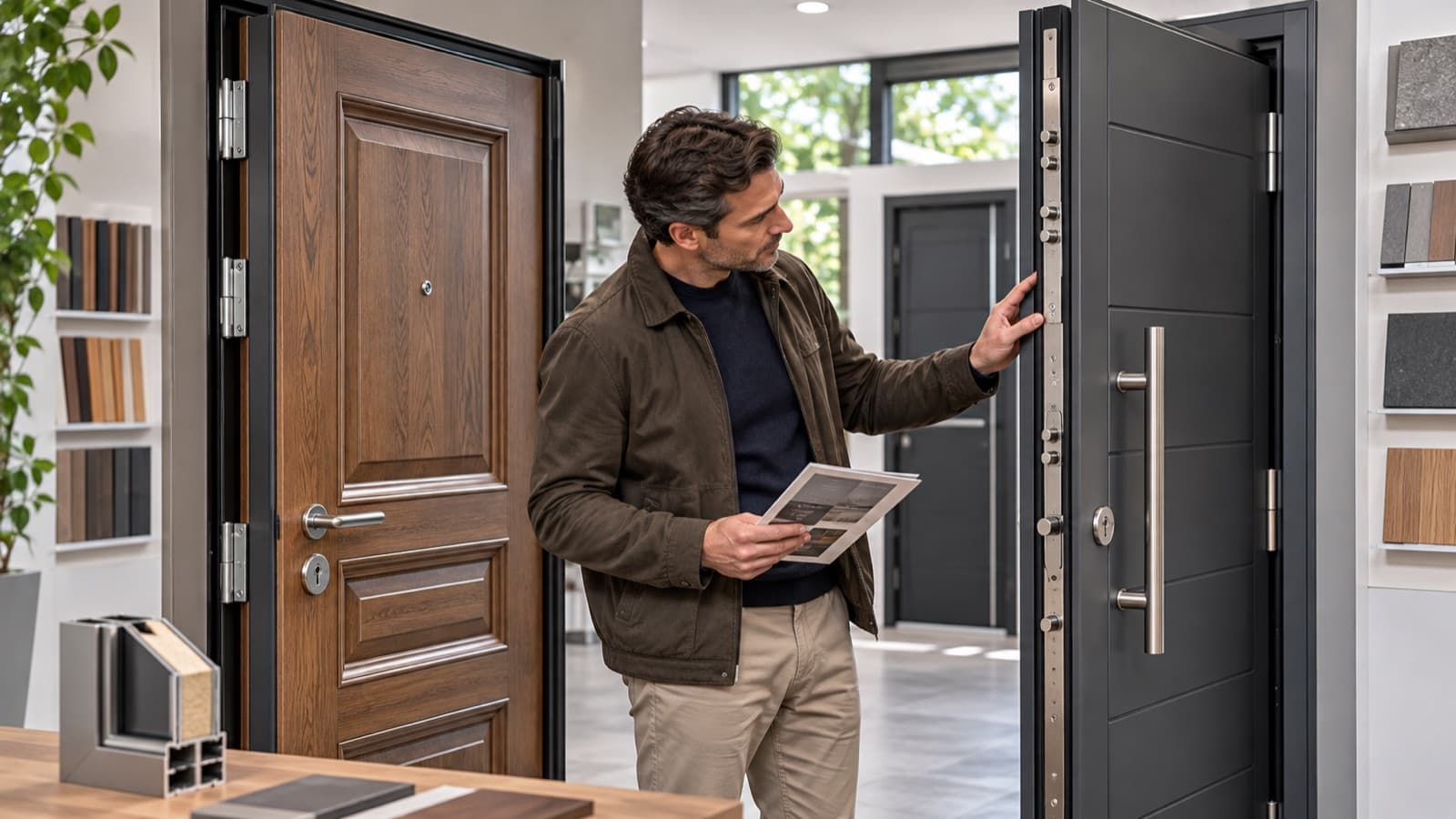
Define the need before comparing models
Start with the property: flat or house, internal or exposed door, quality of the frame, other vulnerable entrances and any insurance requirements. The front door is not always the weakest point.
Then define the objective: correct a weak door, preserve the outside face, improve overall resistance or replace an assembly in poor condition. This priority guides the choice between reinforcement and a complete door set.
An on-site assessment should record dimensions, alignment, gaps, support and installation constraints. A proposal made without examining the frame is incomplete.
Compare door reinforcement with a complete door set
Reinforcement strengthens the existing door. It may preserve its appearance and reduce the scope of the work, but its effectiveness depends on the door leaf and frame. The quote should describe every reinforcement, not only the lock.
A complete armoured door replaces the door and frame with an inseparable assembly. That coherence makes performance easier to compare, but involves more extensive work and may require prior approval.
Do not choose on the number of locking points alone. Their position, the frame resistance, hinge-side protection and installation quality matter just as much as the advertised number.
Read A2P certification correctly
For residential door sets, A2P BP1, BP2 and BP3 correspond to progressively demanding standardised tests. Certification applies to a precise combination of door, frame, lock and components.
Installing a certified lock on an arbitrary door does not automatically make the whole assembly a certified door set. Ask for the exact reference and verify it with CNPP.
Choose the level according to the risk and insurance policy rather than by reflex. Tests provide a comparison point; they do not make any door impossible to defeat.
Do not overlook everyday use
A door must remain easy for the occupants to operate. Check its weight, clear opening width, threshold, opening direction and key handling. Mention any mobility constraint during the assessment.
Depending on the location, acoustic insulation, weather sealing or fire requirements may matter. Ask for documentation supporting the performance actually claimed.
Also plan how spare keys will be managed and whether the cylinder will remain available. A highly specific system can make duplication or maintenance more complicated.
Use the quote as a comparison tool
The quote should state the manufacturer, reference, any certification, dimensions, finishes, removal, frame adaptations, installation and disposal. Options should be separated from essential work.
Ask about the timeframe, acceptance procedure, warranties and documents supplied at completion. Compare identical scopes: a cheaper offer may exclude frame repairs or finishing work.
Explore the door-reinforcement service and our local guide to armoured doors in Nice.