Guide
Broken key in a lock: extract it, repair it or replace the cylinder?
A broken key does not automatically condemn the lock. Depending on the fragment position, cylinder condition and cause of the break, extraction may be enough or may reveal a fault that justifies replacement.
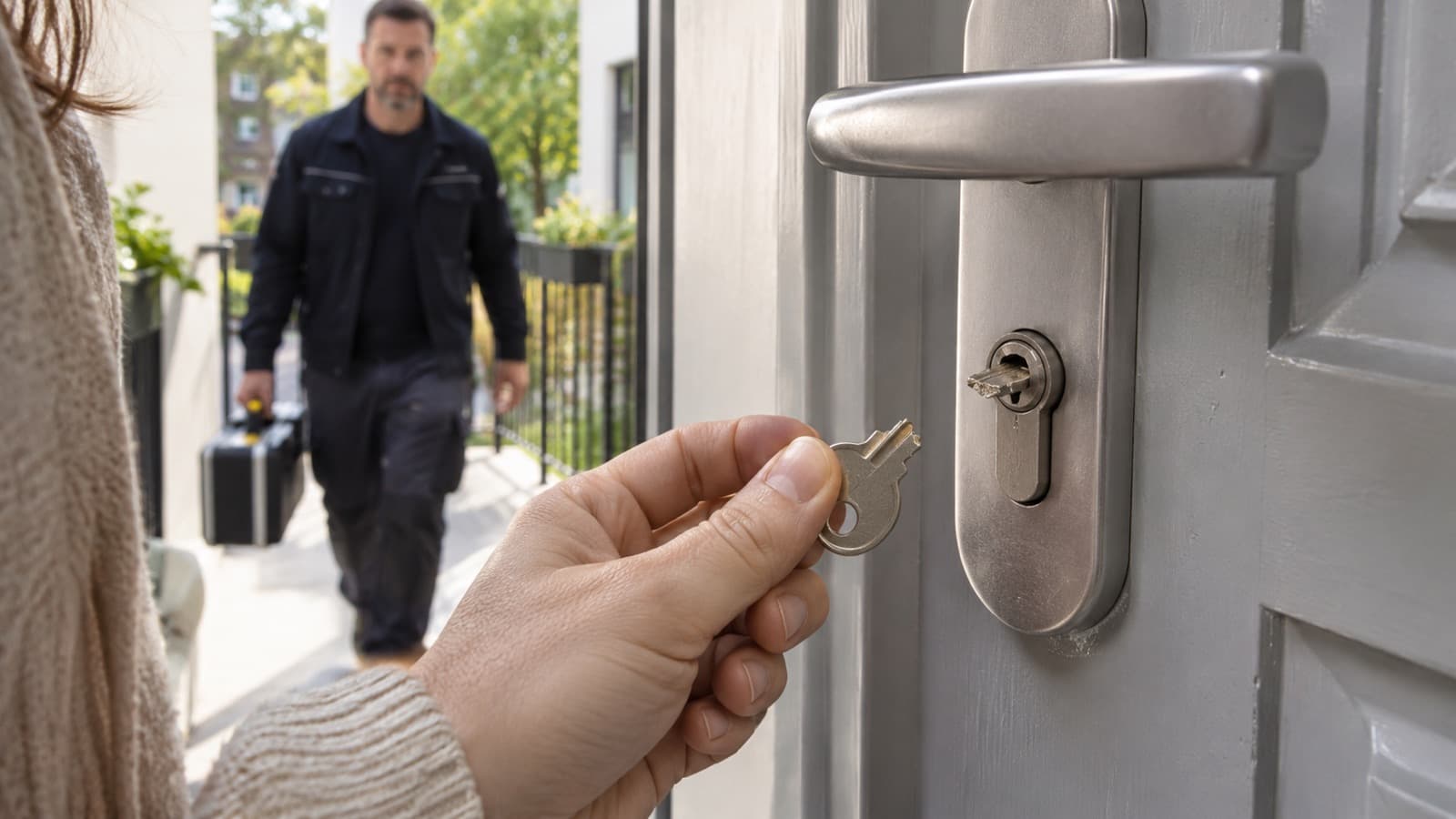
Stop as soon as the key cracks or breaks
Do not push the fragment deeper with another key, a screwdriver or glue. These attempts can jam the pins, contaminate the mechanism or make extraction more difficult.
If part of the key protrudes, avoid twisting it. Photograph the position and keep the other half: its wear and the break point provide clues about the cause.
Do not add lubricant at random. Some products retain dust or complicate the work; first ask what is suitable for the cylinder.
Observe the clues that guide the diagnosis
A key that broke after being forced may indicate a misaligned door, stiff cylinder or resistant lock mechanism. If it previously worked normally and suffered an impact, the cylinder may still be sound.
Explain whether the door is open or closed, slammed or locked, and the position in which the key broke. Access to the other side of the cylinder also changes the operation.
Mention whether a spare key shows the same wear or stiff point. Do not use it until the cause is understood: it may break as well.
When extraction may be enough
If the fragment is accessible, the cylinder is undamaged and the failure came from the key, extraction followed by testing may be sufficient. The professional should then test the mechanism with the door open and closed.
A new key should be cut from a reliable original or the manufacturer’s code, not from another heavily worn copy. Also check that the door does not place pressure on the bolt.
Successful extraction does not correct an alignment defect. If movement remains stiff, ask for the door and lock to be assessed before considering the job complete.
When replacing the cylinder is reasonable
Replacement is reasonable if the cylinder is damaged, the key remains stiff after extraction, several keys are badly worn or control over the keys has been lost.
It may also be prudent after losing an identifiable set of keys, moving home or an attempted break-in. The replacement cylinder should be sized so that it does not project excessively from the door.
Replacing the cylinder will not fix a faulty multipoint lock or distorted frame. Ask the professional to identify the part actually causing the problem.
Prepare the quote and return the lock to service
The quote should separate any door opening, extraction, cylinder, keys and labour. Ask for the reference and characteristics of the proposed equipment.
After installation, test every key from both sides, with the door open and then closed. Confirm that the bolt and locking points move without abnormal effort.
For access scenarios, read opening a door without keys. The lock-replacement service explains the difference between the cylinder and the complete mechanism.